On this page
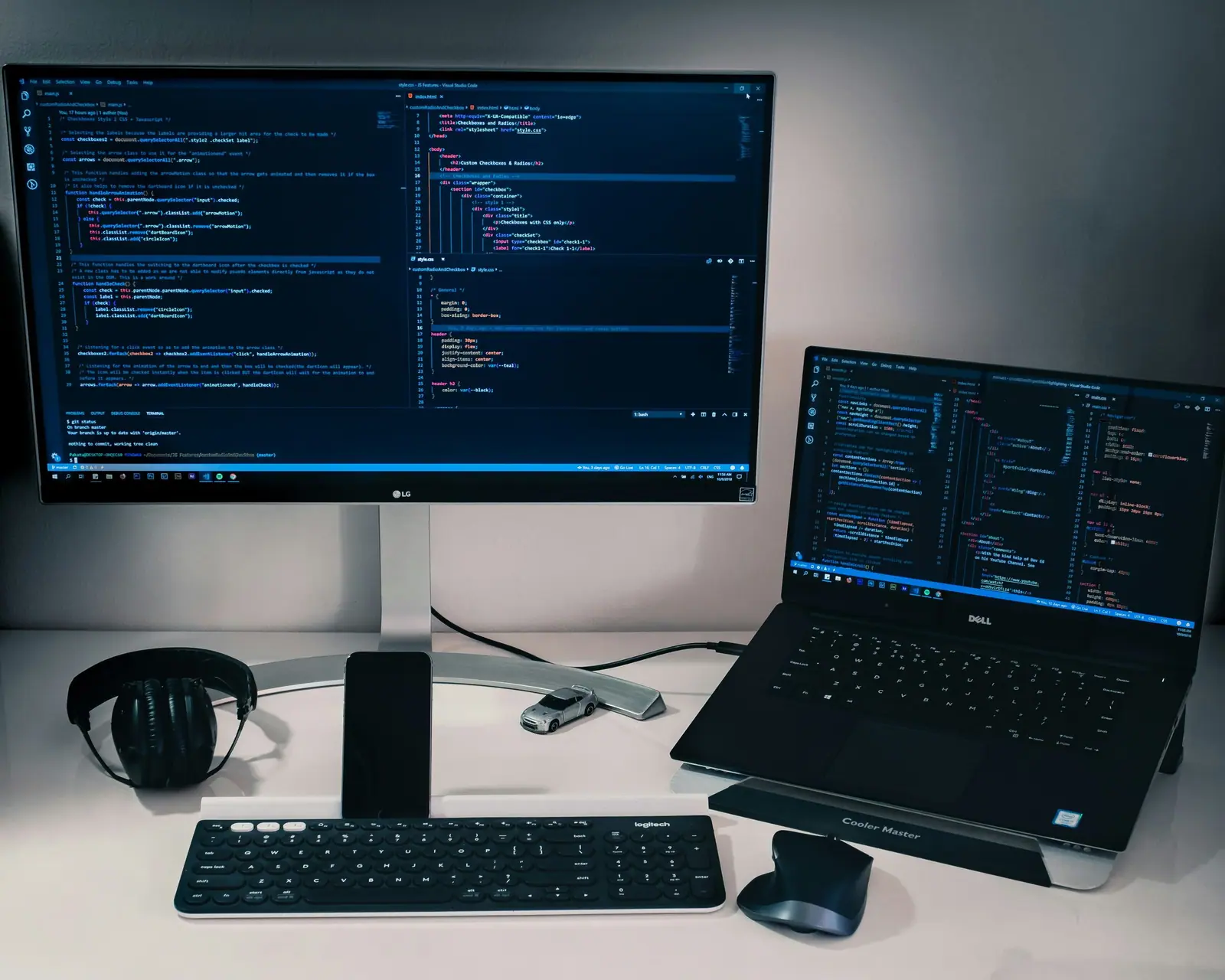
Two Intel N100 mini PCs, a small backup box, a USB disk, a switch and a UPS run around the clock in my flat in Tokyo. They host this blog, its CMS, TraderBuddy, AiBuddy, Argo CD and the monitoring stack. An earlier version of this post used sample figures. This one uses TEPCO's current tariff, the real hardware and 30 days of load data, and then prices the same capacity on AWS and DigitalOcean.
Note
Short answer: about 39 W around the clock, 28.5 kWh a month, ¥1,024 a month or about ¥12,300 a year in electricity. Renting the same four VMs costs about ¥30,400 a month on DigitalOcean and ¥56,900 a month on AWS in Tokyo.
The hardware
| Device | Role | Est. watts |
|---|---|---|
| TRIGKEY Key-N (pve1): N100, 4 cores, 16 GB | Proxmox: one control-plane VM, the worker VM, two small guests | 11 |
| TRIGKEY Key-N (pve2): N100, 4 cores, 16 GB | Proxmox: two control-plane VMs | 11 |
| BMAX B1 Pro-class Celeron box (qdev-pbs) | Quorum tie-breaker, Proxmox Backup Server, etcd snapshots | 4 |
| USB hard disk | Backup datastore | 5 |
| Gigabit switch | Joins the boxes to the router | 3 |
| CyberPower SX550U UPS | Its own electronics and charging losses | 5 |
| Total at the wall | ≈ 39 |
The ISP's router is not on the list. The house would run it anyway.
Where the watts come from
I have not put a watt checker (ワットチェッカー (watto chekkā) — plug-in power meter) on the power strip yet, so each figure starts from a published wall measurement and is adjusted for how busy the box really is. Over the last 30 days Proxmox reports about 13–17% average CPU on pve1 and 16–21% on pve2: light, but never idle, because etcd, Prometheus and the TraderBuddy jobs keep the cores ticking.
- N100 hosts, 9–14 W each. Measured N100 mini PCs idle at about 6–9 W and reach 21–26 W at full load. A Proxmox N100 box running containers measured 11–17 W. I use 11 W.
- qdev-pbs, 3–6 W. A B1 Pro-class Celeron box idles at about 3 W headless. It mostly waits for heartbeats and wakes for the nightly backup.
- USB disk, 2–7 W. The widest range: about 2 W for a 2.5-inch portable drive and 5–7 W for a spinning 3.5-inch drive in a powered enclosure.
- UPS, 3–8 W. CyberPower does not publish a no-load figure for the SX550U, so 5 W is an assumption.
What TEPCO charges per kWh
The house is on TEPCO's regulated plan, 従量電灯B (jūryō dentō B) — metered lighting B, whose rates changed on 1 November 2026. The lab only adds kWh on top of the household's use, so the price that matters is the marginal one. A typical household (TEPCO's model is 260 kWh a month) is in the second tier, so the lab's kWh are billed there.
| Line on the bill (per kWh, tax included) | Nov 2026 | Dec 2026 |
|---|---|---|
| Energy charge, 120–300 kWh (電力量料金 (denryokuryō ryōkin) — energy charge) | ¥36.45 | ¥36.45 |
| Fuel cost adjustment (燃料費調整額 (nenryōhi chōseigaku) — fuel cost adjustment) | −¥5.33 | −¥4.65 |
| Renewable energy surcharge (再エネ賦課金 (saiene fukakin) — renewable energy surcharge, FY2026) | ¥4.18 | ¥4.18 |
| Marginal price | ¥35.30 | ¥35.98 |
I use December's ¥35.98, the latest confirmed figure. The government's 電気・ガス料金支援 (denki gasu ryōkin shien) — electricity and gas bill support discount covered October only, so none is included. The base charge (¥1,176.18 for 30 A) does not count: 39 W will never push the house into a bigger ampere contract.
Note
Rule of thumb: at ¥35.98 per kWh, every watt that runs 24/7 costs about ¥26 a month, or ¥315 a year.
The electricity bill, three ways
| Scenario | Draw | kWh / month | ¥ / kWh | ¥ / month | ¥ / year |
|---|---|---|---|---|---|
| Low: near idle, 2.5-inch disk | 28 W | 20.4 | 35.98 | 735 | 8,830 |
| Central estimate | 39 W | 28.5 | 35.98 | 1,024 | 12,290 |
| High: busier hosts, 3.5-inch disk, house in the third tier | 54 W | 39.4 | 40.07 | 1,580 | 18,950 |
Months are 730 hours. Above 300 kWh a month the tier price is ¥40.54 − ¥4.65 + ¥4.18 = ¥40.07, so in a cold winter month the same 39 W costs about ¥1,140 instead of ¥1,024.
The same capacity on AWS or DigitalOcean
The cluster is four Talos VMs: three control-plane nodes with 2 vCPU and 5 GB each, and a worker with 2 vCPU and 6 GB. That is 8 vCPU, 21 GB of RAM and 280 GB of disk. No cloud plan sells 5 GB, so every option below rounds up to 8 GB per node. I priced two ways to rent it: four plain VMs running the cluster exactly as I do now, and a managed Kubernetes service that replaces the three control-plane VMs. Prices are on-demand, in US dollars, converted at ¥158.29 to the dollar (ECB, 3 November 2026).
| Option | What you rent | $ / month | ¥ / month | ¥ / year |
|---|---|---|---|---|
| Homelab (electricity) | Hardware already owned | 6.47 | 1,024 | 12,290 |
| DigitalOcean Droplets | 4 × Basic 4 vCPU / 8 GB ($48, 160 GB SSD and transfer included) | 192.00 | 30,392 | 364,704 |
| DigitalOcean Kubernetes | 3 × the same nodes, HA control plane ($40), 100 GB volume | 194.00 | 30,708 | 368,496 |
| AWS EKS, Tokyo | EKS cluster ($73), 3 × t3.large, 220 GB gp3, 3 public IPv4 | 343.34 | 54,348 | 652,176 |
| AWS EC2, Tokyo | 4 × t3.large (2 vCPU / 8 GB, $0.1088/h), 280 GB gp3, 4 public IPv4 | 359.18 | 56,854 | 682,248 |
The AWS lines break down like this: a t3.large in Tokyo is $0.1088 an hour, or $79.42 a month. gp3 storage is about $0.096 per GB-month in Tokyo. Each public IPv4 address is $0.005 an hour, about $3.65 a month. An EKS cluster is $0.10 an hour on standard support. DigitalOcean includes disk and transfer in the droplet price and does not charge for IPv4. Its Kubernetes control plane is free, and $40 a month makes it highly available, which is what my three etcd members give me.
- DigitalOcean has no Japan region. The nearest is Singapore, so every request from Tokyo would make a longer round trip. AWS Tokyo is next door.
- A t3.large is burstable. Its baseline is 30% of each vCPU. My nodes average under 20%, so they would fit, but the nightly TraderBuddy backfills would spend CPU credits.
- Cheaper AWS options exist. A Graviton t4g.large is $0.0864 an hour in Tokyo, but my images are built for amd64. Savings Plans and Reserved Instances lower the EC2 line if you commit for one or three years. I priced on-demand because the homelab has no commitment either.
- Backups and egress are not in the cloud figures. Adding the nightly backups and the outbound traffic would only raise them.
Against the cheapest cloud option, the homelab saves about ¥29,400 a month. If the hardware cost ¥150,000 in total, it paid for itself in about five months. Even with the mini PCs replaced every four years, the electricity-plus-hardware total stays a small fraction of the cloud bill.
Warning
The cloud price buys things the homelab does not have: a datacentre with redundant power and network, a provider SLA and hardware nobody has to repair. My whole cluster shares one house, one ISP, one switch and one UPS. For a personal lab that trade is fine. For a business it usually is not.
What this number leaves out
- The hardware. Spread over four or five years, depreciation is probably larger than the electricity.
- The fibre line and router. The house pays for these anyway.
- Domain and Cloudflare. The tunnel and the R2 buckets fit the free tiers. The domain is a few thousand yen a year.
- UPS batteries. A real cost every few years.
- Summer cooling. About 39 W of extra heat adds a little to the air conditioner's work.
Turning the estimate into a measurement
The weakest link is the watts. A plug-in watt checker between the wall and the UPS would replace six estimates with one measured number. When I have it, I'll update this post. Until then, ¥1,000 a month is the central figure, and the real one is very unlikely to be above ¥1,600.
Sources
- TEPCO: 従量電灯B unit prices before and after 1 November 2026
- TEPCO: fuel cost adjustment for December 2026 (press release, 29 October 2026)
- TEPCO: fuel cost adjustment for November 2026
- Selectra: FY2026 renewable energy surcharge, ¥4.18 per kWh
- idlewatt: Trigkey Green G4 (N100) wall power and CWWK N100 under Proxmox
- AstLinux: BMAX B1 Plus/Pro power notes
- AWS: EC2 on-demand pricing (Tokyo), EBS pricing, EKS pricing, VPC pricing (public IPv4)
- DigitalOcean: Droplet pricing and Kubernetes pricing
- Frankfurter (ECB reference rates): USD/JPY on 3 November 2026